



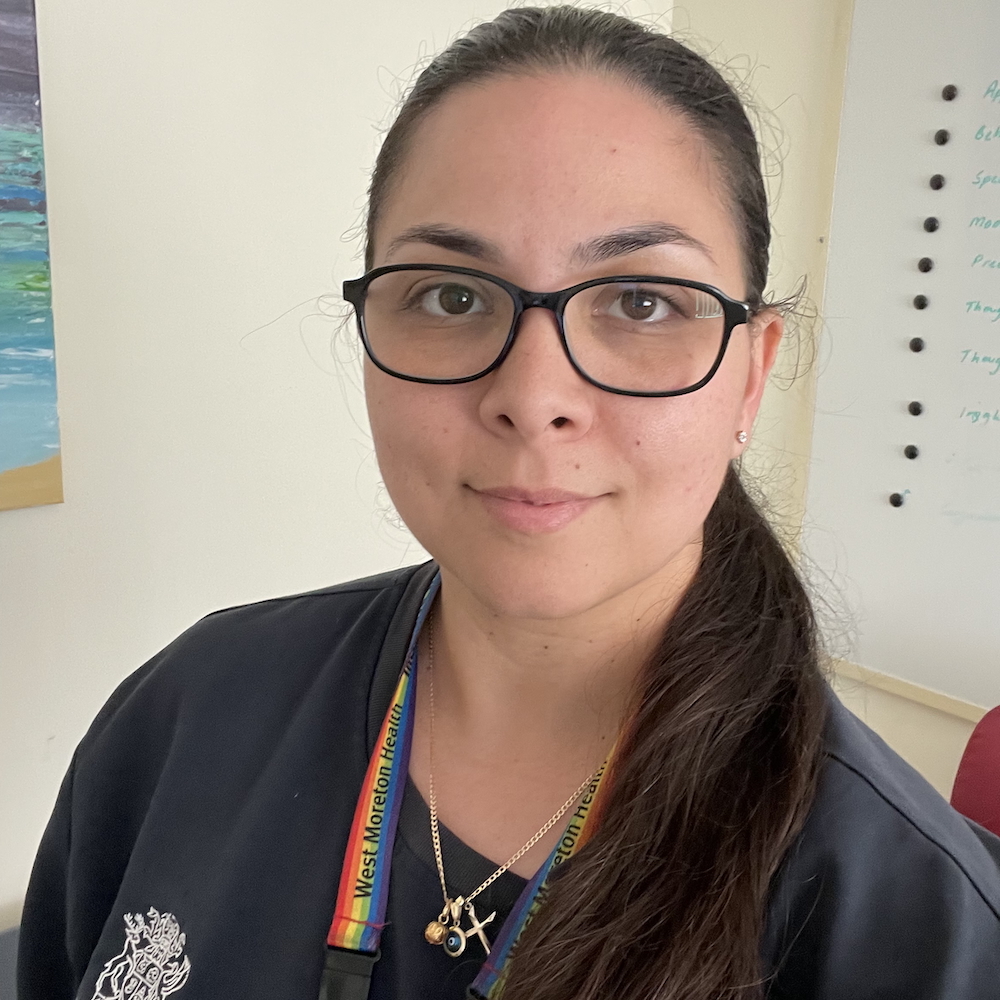
Trudi Roy
Clinical Nurse Community Health Care Service
 Career Profiles
Tell us about your career so far in the mental health sector.
I qualified as a Mental Health Nurse in Scotland in 1998 and left nursing in 2002 to become a paramedic for 16 years. In 2016, I returned to nursing in mental health. When I immigrated to Australia in 2018, I took a nursing job with Uniting Care in a 33-bed mental health unit, where I still work part-time to this day. I also started a part-time role as a Clinical Nurse in community mental health with Queensland Health in 2023.
What made you choose a career in mental health?
I didn’t, it chose me! I started as a ‘general’ student nurse in 1995 (in Scotland we specialise in either general or mental health nursing) and completed 2 placements in hospital, then I realised it wasn’t for me, I found it too impersonal and task orientated. I realised I wanted to sit at a patient’s bedside and talk to them, hear their story, hold their hand and offer support or reassurance where appropriate.
I approached my facilitator and told them I had decided to leave nursing as it was not for me. My facilitator asked if I would consider a mental health placement? Initially, I said no, but agreed reluctantly, and I ended up loving my placement and continued with my studies.
I left nursing after 4 years. I had returned to Scotland in 2002 from Australia and there were limited jobs in mental health and limited career progression, so I joined the Scottish Ambulance Service and worked my way up to a paramedic. After 16 years with the Scottish Ambulance Service I knew I wanted to raise my children in Australia. I followed my dream of immigrating to Australia, did a return to nursing course allowing me to register with AHPRA and returned to the field of mental health nursing as a newbie. I have gradually worked my way up the ladder to Clinical Nurse positions in both roles that I hold and I am one of the lucky ones that can say I love both jobs!
What do you find most rewarding about your current role?
Being able to build trust and rapport with many of society’s most vulnerable people.
What do you find most challenging about your current role?
Limited resources in mental health.
What does a typical day for you look like?
My community role with Queensland Health is varied and involves a lot of coordination with external clinicians, clients and families, for example, coordinating consumer meetings to assess their mental state and offer support. I update consumer notes to provide accurate documentation and information sharing, refer consumers to external supports, order medications and book medical reviews. I also have to ensure medications are administered correctly under the Mental Health Act. My role also entails liaison with pharmacies, GPs and psychiatrists.
What are misconceptions you believe people have about working in the mental health sector?
- That it’s unsafe and all mental health consumers are violent. Stigma can prevent people from wanting to work in this field.
- That there is a lack of career progression or the concern that there will be limited job opportunities.
What advice would you give to people who are interested in working in mental health?
To educate yourself in the field and follow your passion. If you are someone who cares, has compassion and seeks to make a difference – however small – then this may be the career for you!
Do you have any other thoughts you’d like to share?
When should you not work in mental health? If you see it as an easy option and as ‘not real nursing’, then this is not the right career for you.
Career Pathway
Explore Other Profiles



Subscribe to the HTQ eNewsletter
Health research news, events and funding opportunities delivered monthly to your inbox.
Subscribe today