


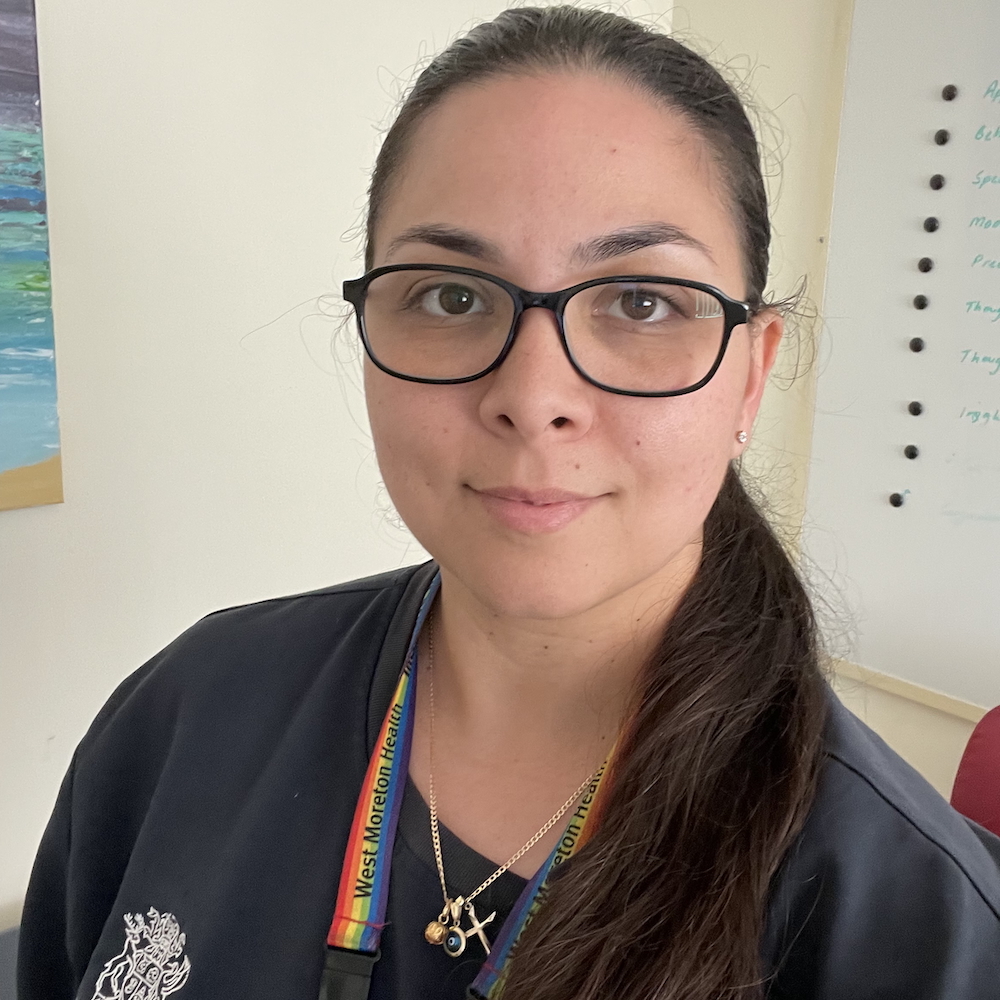
Jazzie Dos Reis
Clinical Facilitator Hospital and Health Service
 Career Profiles
Tell us about your career so far in the mental health sector.
I started as a casual Enrolled Nurse in forensic mental health and loved it. I went on to do my bachelor’s degree, then participated in the state-wide transitional support program in forensic mental health as a Registered Nurse. After this I proceeded with a Master in Mental Health and participated in the West Moreton Master of Mental Health Nursing Program.
Through my master’s program, I learnt to really enjoy education and as soon as there was an education opportunity I went for it. I have been in education for 3 years now. My substantive role is as a Clinical Facilitator and have been acting in Nurse Educator roles. I really enjoy working in mental health. In total, I have worked 10 years as a Mental Health Nurse and I don’t see myself moving to another area of nursing.
What made you choose a career in mental health?
Truly being able to work with people who have a mental illness. Personally, I didn’t enjoy the overly task orientated role of nursing in the general setting. When I was studying I didn’t have a good understanding of mental health nursing or that there were many opportunities in mental health. I stumbled into my position as an Enrolled Nurse through a family friend and I am so glad I did as I was contemplating doing a different bachelor’s degree and not continuing to grow in my nursing profession.
I love being able to talk to people, really offer them my support and time, and work on their recovery. I find it rewarding to help people through their recovery journey and seeing people learn to live quality lives with their mental illness. Clients I have worked with have also been so inspirational and empowering for me to see them work through and overcome challenges. It is amazing!
What do you find most rewarding about your current role?
I love being able to support reducing mental health stigma and help people grow into our area of nursing in a way that supports our clients and flourishes their passion for mental health nursing.
What do you find most challenging about your current role?
Capacity. There is always lots to do, but sometimes there is not enough time.
What does a typical day for you look like?
The larger part of my role is to prepare and deliver education to our staff on various topics and tasks and to facilitate our education programs. It is a lot of fun.
What are misconceptions you believe people have about working in the mental health sector?
- That you lose skills – Our general nursing skills may not be that of a nurse in the general setting as we may not have as much exposure to physical health emergencies; however, mental health is holistic and physical illnesses often co-exist that we care for. Also, we develop great skills in being able to talk and work with people that I find nurses in other areas aren’t confident in. We all have strengths in our areas!
- That mental health is just a violent area to work in – We are equipped to be vigilant of our surroundings and there can be risks; however, our skills in de-escalation, trauma informed approaches and utilising other less restrictive practices and team work help mitigate risks. I have been working for 10 years in this area and have felt safe the majority of my time in the forensic mental health space. In the few times I haven’t, I have received great support and always felt my team was right by my side if I needed them.
- That mental health has only in-patient settings – We have community case management roles, education, acute care teams, prison mental health teams, alcohol and other drugs services and other settings also!
What advice would you give to people who are interested in working in mental health?
If you have the heart, do it! We want people to work here who value our clients and the work we do.
Career Pathway
Explore Other Profiles


Subscribe to the HTQ eNewsletter
Health research news, events and funding opportunities delivered monthly to your inbox.
Subscribe today