


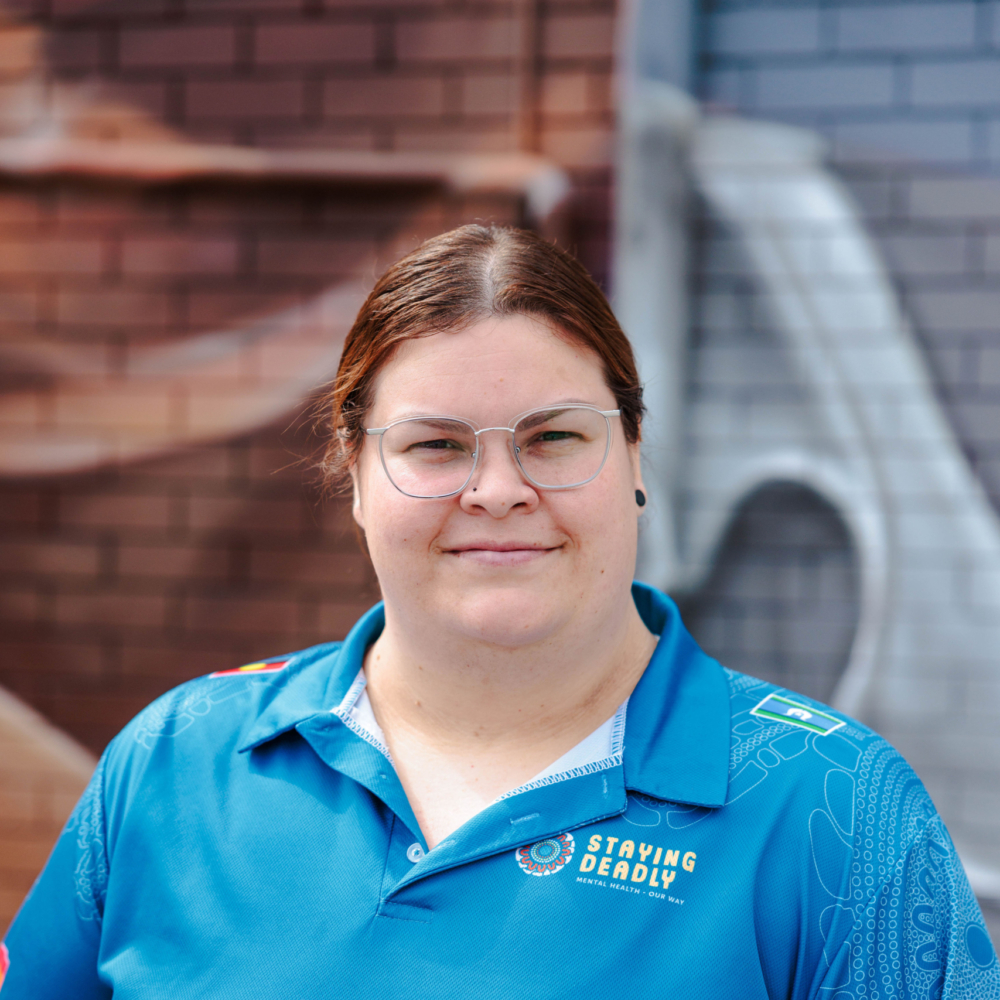
Tegan Somers
Care Coordinator Institute for Urban Indigenous Health
 Career Profiles
Tell us about your career so far in the mental health sector.
I left school and Aboriginal and Torres Strait Islander primary health care, then went on to study a bachelor of paramedicine, whilst working full time as a support worker for clients with moderate to severe mental health diagnoses. I saw this ad on seek and applied for it straight away being a proud Aboriginal woman — there’s nothing I wanted more than to work with mob and in the mental health space.
What made you choose a career in mental health?
Going through my own struggles, and seeing friends and family in the same space — I wanted to work in mental health because it’s something I am passionate about but also because it’s something most people don’t like to talk or think about. It gets disregarded frequently.
What do you find most rewarding about your current role?
The connection we make with our clients, and how well we can build that trust in our relationship that makes them feel comfortable to share their story, but also to keep up their engagement.
What do you find most challenging about your current role?
I think the thing I find most difficult about my role is the stigma around mental health, and how mob think it’s shame to talk about it or be experiencing these issues and not seek help. In this role I tell my clients that it’s not shame, and everything starts with a yarn.
What does a typical day for you look like?
I’d say every day is definitely different, 9am is our morning huddle with the team for 30 minutes then it goes on from there. As each day is different, I could be on outreach which means support clients out in their community whether it be in their home, to appointments or simply meeting somewhere for a yarn. If I’m not on outreach, I’m usually in the hub meeting clients for appointments to come in for a check-in, sitting in with our mental health clinicians for a session with our clients, working on the case notes or on the phone with clients. As I said it’s hard to say what I exactly do in a day as every day I’m doing different things.
What are 3 misconceptions you believe people have about working in the mental health sector?
- Weakness stigma – Mental illness is not a sign of weakness.
- Fear of discrimination – Some worry that seeking help may lead to discrimination from peers or leaders.
- Rare Occurrence of Mental Illness – Contrary to the misconception that mental illness is uncommon, it affects a significant portion of the population.
What advice would you give to people who are interested in working in mental health?
I’d say go for it! I think mental health is an ongoing thing, and there are not enough services or people to help those who are currently battling mental health issues – and I think with more people in the mental health sector that a difference could be made.
Do you have any other thoughts you’d like to share?
Do I love my job? Yes, I absolutely do!
The thing I find most difficult about my role is the stigma around mental health, and how mob think it’s shame to talk about it or be experiencing these issues and not seek help. In this role I tell my clients that it’s not shame, and everything starts with a yarn.
Tegan Somers
Explore Other Profiles
 Aboriginal and Torres Strait Islander Mental Health Worker


Subscribe to the HTQ eNewsletter
Health research news, events and funding opportunities delivered monthly to your inbox.
Subscribe today